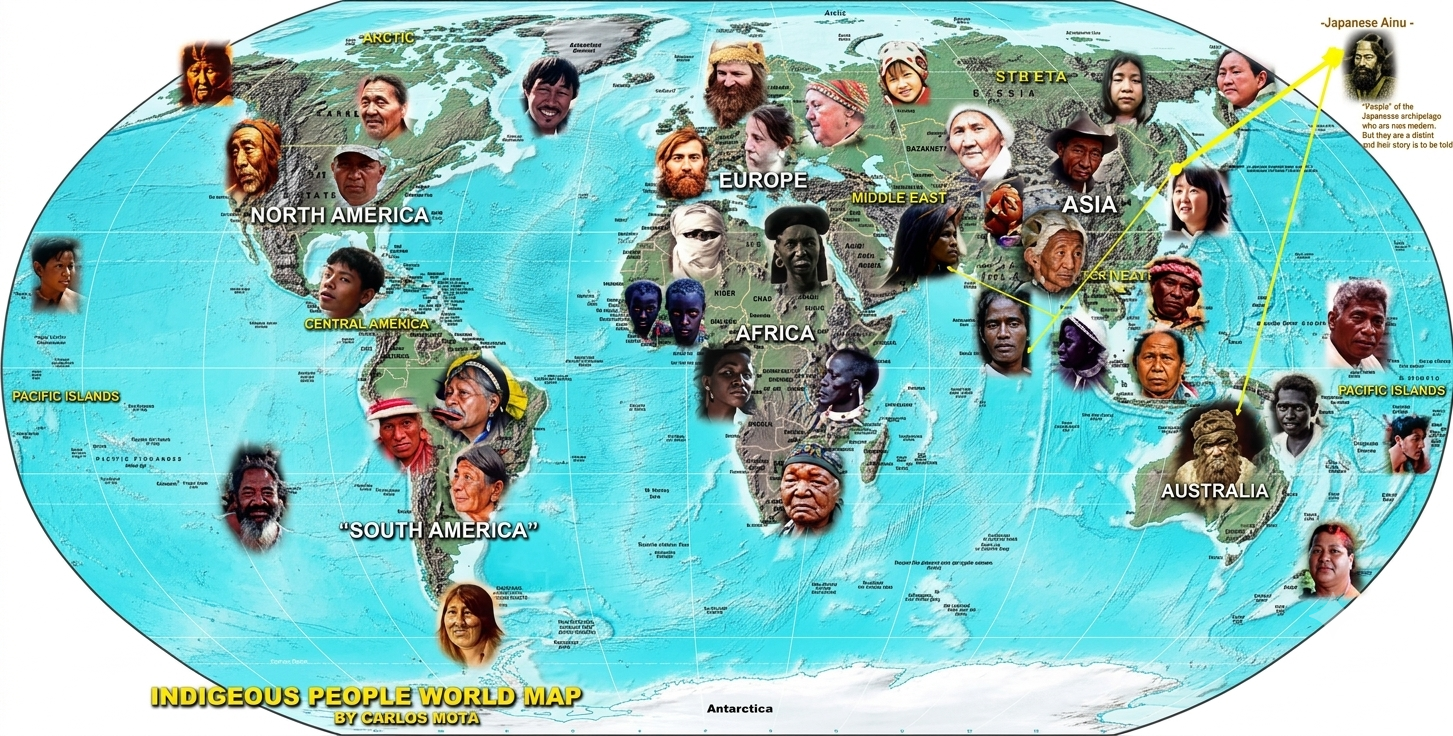
7. Indigenous Peoples of the World – Protectors of the Environment

Author: Steve Gruber, MBA
There are over 5,000 distinct Indigenous groups worldwide, representing approximately 476 million people. These groups make up roughly 6.2% of the global population and are spread across 90 countries. They are distinctive in their cultural diversity as they represent a vast array of cultures and languages that significantly contribute to the world’s cultural heritage. But perhaps their greatest contribution is that they often live in close relationship with the land and are key guardians of biodiversity, holding significant knowledge about their natural environment. They are global leaders in environmental protection.
Challenges to the Indigenous Peoples of the World
Indigenous groups globally face diverse and interconnected challenges stemming from historical injustices, ongoing discrimination, and the impacts of modernization and development. These challenges include loss of land and resources, cultural and linguistic erosion, limited access to basic services, and vulnerability to environmental degradation and climate change.
- Loss of Land and Resources
Indigenous peoples are often dispossessed of their ancestral lands and resources, which are crucial for their livelihoods, cultural practices, and survival. This can be due to large-scale development projects, resource extraction, and land grabbing. - Discrimination and Marginalization
Indigenous peoples frequently experience discrimination and marginalization in various aspects of life, including access to education, healthcare, housing, and political participation. - Cultural and Linguistic Erosion
Indigenous languages, cultures, and traditional knowledge systems are under threat due to assimilation policies, globalization, and the dominance of mainstream cultures. - Human Rights Violations
Indigenous peoples are often subjected to violence, abuse, and other human rights violations, particularly when defending their rights and lands. - Environmental Degradation and Climate Change
Indigenous communities are often disproportionately impacted by environmental degradation and climate change, facing threats to their livelihoods, culture, and survival. - Lack of Access to Basic Services
Indigenous peoples often lack access to adequate education, healthcare, sanitation, and other basic services, leading to lower levels of development and increased vulnerability. - Internal Conflicts
Internal conflicts within indigenous communities can further exacerbate existing challenges, particularly in the context of land disputes, resource management, and political mobilization. - Vulnerability to Natural Disasters
Indigenous communities, often residing in remote and isolated areas, are particularly vulnerable to natural disasters, such as floods, droughts, and earthquakes. - Forced Assimilation and Cultural Erasure
Indigenous peoples have been subjected to forced assimilation policies aimed at erasing their cultures and languages and integrating them into dominant societies. - Racism and Bullying
Racism and bullying against Indigenous communities are deeply rooted in history and continue to impact Indigenous peoples worldwide.
Addressing the Challenges
- Recognition of Indigenous Rights
Protecting and promoting the rights of indigenous peoples, including their right to self-determination, land rights, cultural rights, and linguistic rights, is crucial. - Support for Indigenous-Led Initiatives
Empowering indigenous peoples to lead their own development and decision-making processes is essential. - Promoting Cultural Preservation and Revitalization
Supporting efforts to preserve and revitalize indigenous languages, cultures, and traditional knowledge systems is vital. - Addressing Environmental Impacts
Working to mitigate the impacts of environmental degradation and climate change on indigenous communities is crucial. - Promoting Reconciliation
Initiatives aimed at reconciliation between indigenous peoples and dominant societies can help heal historical wounds and foster more equitable relationships. - Addressing Systemic Inequalities
Tackling systemic inequalities in access to education, healthcare, and other services is necessary to ensure equal opportunities for indigenous peoples.
Images of Indigenous Peoples of the World