Mining in Chile and Its Sustainability.

Author: Laurence Hewick, PhD

Introduction.

South America is a global mining powerhouse, dominating in the production of copper, lithium, niobium, and silver. Chile and Peru lead in copper, while the “lithium triangle” (Chile, Argentina, Bolivia) holds massive reserves. Brazil, a major hub, leads in niobium and iron ore, with significant untapped potential in the Amazon.

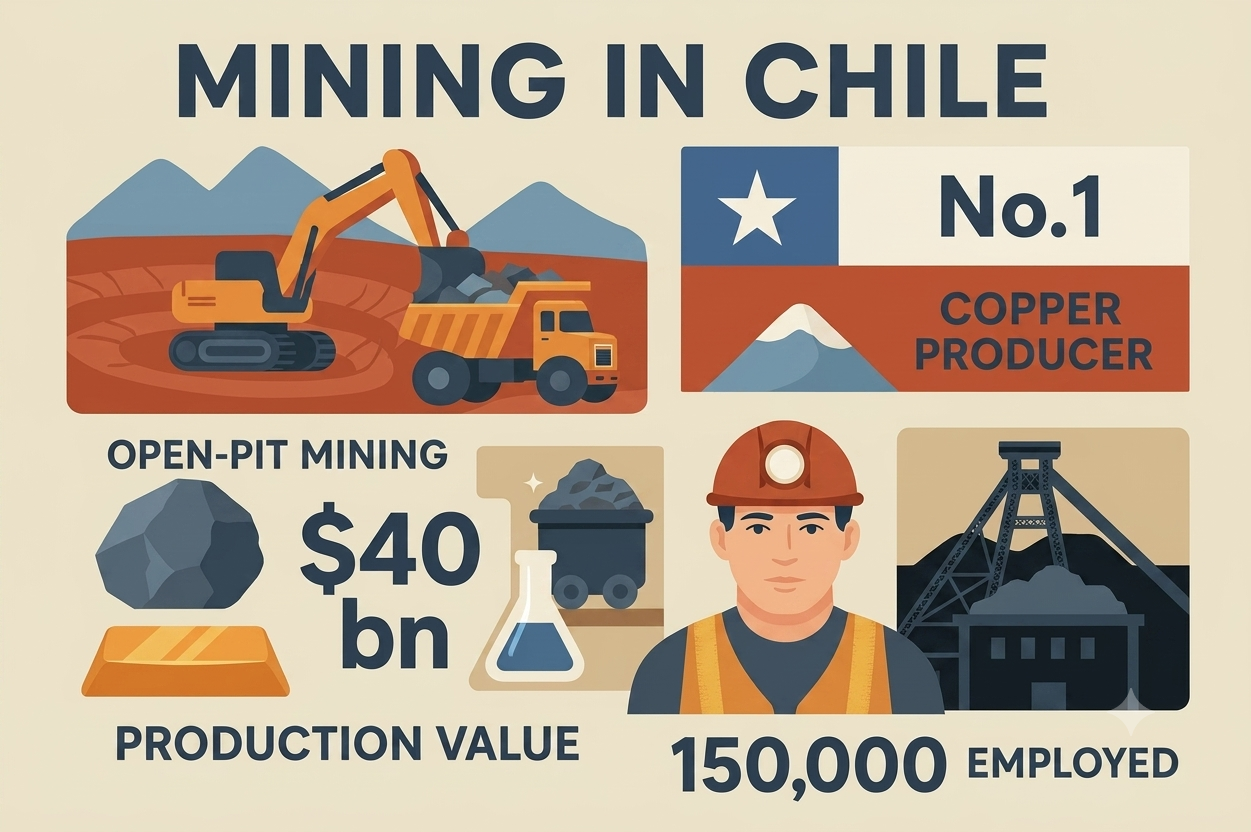
Chile is the world’s leading mining production country holding the top position as the largest producer of copper, iodine, and rhenium, while being the third largest for lithium and molybdenum. Mining, particularly copper, drives the economy, contributing 12% to the GDP and accounting for over 57% of total exports that also amounts to about 24% of global output. The mining sector is facing challenges with declining ore grades and falling production, but major projects are planned for 2024–2033 to fight this challenge.

The mining sector in Chile has historically been and continues to be one of the pillars of the Chilean economy. It is concentrated in 14 mining districts, all of them in the northern half of the country and in the Norte Grande and Norte Chico regions spanning most of the Atacama Desert. Major operations include Codelco the world’s largest copper producer (State owned) but also produces molybdenum, gold, silver and sulfuric acid have made significant investments in sustainability, technology, renewable energy and innovation.

Sustainability of Mining in Chile.

Mining in Chile is undergoing a significant, yet challenging, transformation toward sustainability, driven by renewable energy integration, water recycling, and strict carbon reduction targets. Renewable energy refers to energy derived from natural resources that are replenished at a higher rate than they are consumed. Examples include solar, wind, hydro, biomass, and geothermal energy. These sources are sustainable because they can be used without running out of the resource in question. The benefits of renewables are mostly environmental that reduces greenhouse gas emissions and helps mitigate climate change. Although given the current state of the world in 2026 the benefits also become economic as supply of oil from the Middle East has been greatly reduced due to war.

While mining remains a top economic driver it faces pressure to manage high water consumption in arid regions and reduce significant greenhouse gas emissions. Chile’s mining sector’s current key sustainability trend is focused on renewable energy integration. It is leveraging its geography to power mines with solar, wind, and hydro, aiming for 90% renewable electricity in mining by 2030 and 100% by 2050. Chile is a global leader in renewable energy, generating approximately 70% of its electricity from renewable sources in 2024. The renewables comprise of about 25% from hydro, 20% from solar, 15% from wind and 10% from green biomass. Over half of the electricity for large-scale mining now comes from renewable sources, with companies like BHP and Antofagasta Minerals switching to solar and wind.

Other examples of Chile’s mining sector sustainable environmental strategies include moving their mining fleets from diesel to electric with remote-operated and electric vehicles. Green hydrogen is being explored for heavy transportation and equipment, along with carbon capture technologies that should produce zero emission ming fleets by 2030. The industry is increasing use of desalination plants to reduce freshwater usage, aiming to power these with renewable energy to reduce the overall environmental footprint. The National Mining Policy 2050 and the Mining Council’s agreements set strict, actionable targets to make Chile a leader in sustainable, low-carbon copper and lithium mining. Efforts are also underway to improve tailings management and prioritize circular economy practices in waste management as well as re-process tailings to extract valuable metals like rare earths thus further reducing waste and its carbon footprint. As well as adoption of pyrolysis technology to recover carbon black, steel, and oil from the 27,000 tons of tires generated annually by the mining industry.

Social and Community Efforts.

Chile’s mining firms are increasingly establishing “social licenses” to operate through improved transparency, communication, and agreements with local communities regarding water use and environmental protection. Other examples of the mining sectors efforts to improve relations with its society include efforts to fund education programs, technical training, and supporting local suppliers to ensure the economic benefits of mining reach nearby communities. Advanced technology, such as autonomous vehicles and remote-control rooms, are being deployed to move workers away from high-risk environments, enhancing both efficiency and safety. Working on improving gender diversity, with initiatives like the “Female Entrepreneurs Program” support local women. Finally, the creation of the Center for Innovation and Circular Economy (CIEC) in the Tarapacá region to drive circular business models and high-impact innovation.

Conclusion.

Chile’s mining industry remains a cornerstone of its development, with strong prospects due to the global demand for copper and lithium, renewable energy infrastructures and electric vehicle production. Based on current trends and projections for 2026 and beyond, the future of mining in Chile will be driven characterized by a transition toward sustainability, technology-driven efficiency, and a diversified portfolios that extends beyond traditional copper mining into critical minerals like lithium. While copper will remain the backbone of the economy, the sector faces structural challenges, including declining ore grades and sometimes slow, strict permit processes. Despite these challenges Chile will remain the world’s largest copper producer, with production expected to rise toward a peak in 2027 and again around 2033–2034. The future focus is on expanding existing mines (brownfield projects), such as major upgrades to Escondida and El Abra, rather than new greenfield developments, accounting for 80% of investment through 2033. To offset declining grades, mines are adopting automation, autonomous vehicles, and remote operation centers to improve safety and efficiency.

 The government is actively promoting public-private partnerships via its National Lithium Strategy to maximize production, aiming for a significant share of the global lithium market. Beyond lithium, Chile is prioritizing 14 other minerals, including cobalt, rare earths, molybdenum, and rhenium to reduce reliance on copper. A key future strategy involves re-treating tailings and mining waste to extract new metals, converting environmental liabilities into economic assets for the mines and their surrounding communities.

The biggest hurdle is not geological but institutional, with projects requiring hundreds of permits. The new administration taking power in March 2026 is expected to focus on streamlining these to encourage investment. The government further recognizes that Chile will remain a premier mining jurisdiction but faces increasing competition from Argentina and Peru. Maintaining a stable tax and regulatory environment is crucial to securing the $100+ billion in planned investment through 2034. They also recognize that securing a “social license” continues to be essential and maintaining positive community relations remains a top risk factor. The government must also focus on faster permitting and strong ESG (Environmental, Social, and Governance) standards.

References.

The Northern Miner, April 2026
Bloomberg News, March 2026
Mining in Chile, January 2026
International Trade Administration, November 2025
Cochilco Forecast, January 2026
Seeds of Sustainable Development, 2025

Water Challenges in Central Chile.

Author(s): Roberto Salazar, Laurence Hewick.
Date: 4/26

Abstract

Chile’s current policy debate is centered on energy pricing and stabilization. This paper argues that the same underlying allocation problem is already present in water, particularly in Central Chile, but with greater structural depth and longer-term implications. We develop a sequence that moves from observable energy dynamics to the less visible but more binding water constraint, and from there to a strategy that integrates pricing, investment, and governance. The proposal is to strengthen price-based allocation within a coordinated institutional framework, enabling accelerated investment and growth with distribution.

WATER IN CENTRAL CHILE

  1. From Energy Debate to Structural Constraint
    Chile is discussing energy because energy prices move quickly and affect all agents immediately. This forces coordination: pricing rules, stabilization mechanisms, and distributional adjustments are addressed in real time. The system reacts because it must.

    Water does not behave this way. It accumulates imbalance slowly. Supply declines over time through lower precipitation and reduced snowpack. Demand remains stable or increases. The system absorbs the gap until it cannot. At that point, the adjustment does not occur through prices alone but through restrictions, delays, and disputes. The relevance of the current energy debate is therefore not limited to energy. It provides a visible case of allocation under scarcity. Water represents the same problem, but with longer lags, more actors, and higher territorial complexity.
  2. Central Chile: Where the Constraint Becomes Binding
    Central Chile concentrates population, agricultural production, and urban systems within the same basins. This concentration matters more than any single variable. Agriculture depends on seasonal water availability. Urban systems require continuity. Environmental requirements impose minimum flows. These demands do not operate sequentially; they operate simultaneously. Under stable supply, the system absorbs this overlap. Under declining supply, the overlap becomes a constraint.

    Since 2010, hydrological conditions have shifted. Precipitation deficits, reduced snow accumulation, and higher variability have lowered the effective water envelope. What used to be variability is now constraint. The system must allocate within tighter limits.
  3. What Is Already Working
    Chile is not starting from zero. It has one of the most developed allocation systems in water.

    Transferable water rights allow reallocation across users. Urban systems operate with tariff structures that sustain service continuity. Investment in infrastructure has maintained functionality even under stress. These are not marginal features. They are the backbone of the system. They show that price-based allocation is not theoretical. It is operational.
  4. Where the System Begins to Fail
    The current challenge does not arise from the absence of prices. It arises from the fact that prices operate in a system that has not fully adapted to new constraints. Hydrological conditions have changed, but rights reflect past availability. Demand has concentrated further, but coordination across sectors has not deepened at the same pace. Investment is needed, but projects face delays linked to territorial and regulatory alignment. The result is a system that allocates but does not fully coordinate. Prices signal scarcity, but they do not resolve how different actors agree on the path forward. This is where the tension begins to shift into distributional debates, fiscal discussions, and resistance to projects. These are not independent phenomena. They are the expression of incomplete system alignment.
  5. The Economic Structure Behind the Problem
    The structure is classical. Prices allocate scarce resources. They move water toward higher value uses and provide signals for investment. Removing or weakening this mechanism would reduce efficiency and increase opacity. At the same time, distribution cannot be left unresolved. Access, territorial balance, and environmental constraints must be addressed explicitly. This is not a contradiction. It is the standard result in economic theory: allocation and distribution are distinct problems that must be solved with different instruments.
  6. Why Coordination Becomes Central
    Water allocation involves multiple actors with different objectives and time horizons. Agricultural producers, urban utilities, communities, regulators, and investors interact repeatedly under uncertainty. Without coordination, outcomes tend to reflect short-term positions rather than system-wide efficiency.

    This is consistent with results from social choice, public choice, and game theory. Preferences cannot be aggregated without conflict, institutions reflect incentives rather than optimal design, and non-cooperative equilibria can persist even when cooperation is beneficial. In practical terms, this means that the system requires a mechanism that allows actors to align before decisions are executed.
  7. From Allocation to Strategy
    The next step is not to redesign the system. It is to complete it. The proposal follows a clear sequence.

    First, define the constraint at basin level. This establishes how much water is available, when, and under what variability. Without this, all subsequent decisions operate on incomplete information.

    Second, translate that constraint into a program of actions. This includes storage, efficiency improvements, reuse, and network optimization. These are not abstract ideas; they are investable projects.

    Third, align the actors who will implement and be affected by these actions. This is where coordination becomes operational rather than theoretical.

    Fourth, define processes that allow the system to operate over time, incorporating data updates, monitoring, and adjustment rules.

    Only after these steps does pricing operate fully. At that point, prices reflect agreed constraints and provide clear signals for allocation and investment.
  8. The Role of the Hexagonal Dialogue
    The alignment step requires structure. The Hexagonal Dialogue provides that structure by bringing together the six relevant actor groups: public sector, private sector, communities, academia, media, and global partners.

    This is not a forum for general discussion. It is a mechanism to reduce uncertainty before investment decisions are taken. Projects are presented, constraints are made explicit, and trade-offs are negotiated in advance. For investors, this reduces execution risk. For territories, it provides visibility and participation. For the state, it improves policy implementation. The result is a system where projects move faster because they are better aligned from the outset.
  9. Investment as the Bridge
    Once alignment is achieved, investment becomes the bridge between allocation and distribution. Pricing allocates existing resources. Investment expands effective supply and improves efficiency. Growth follows from increased capacity and productivity. As income increases, distribution becomes feasible without distorting allocation. This is the key point. Distribution is sustained when it is based on expansion rather than on reallocation under scarcity.
  10. A System for Growth with Distribution
    The objective is not to choose between markets and coordination. It is to integrate them.

    Prices remain the core allocation mechanism. They ensure that resources move efficiently and that signals for investment are clear. Coordination ensures that those signals can be acted upon without generating conflict. This combination allows the system to move from scarcity management to development. Water ceases to be only a constraint and becomes a platform for investment, growth, and territorial integration.
  11. Position within a Broader Sequence
    This paper is part of a broader analytical sequence. The first document addressed forestry in southern Chile. This document focuses on water in Central Chile. The next will address mining in northern Chile. The sequence follows a territorial logic and is framed within a wider Andean perspective. References to initiatives such as URKU and Sierra Andes form part of this broader line of applied research, which seeks to connect resource management with investment mechanisms and territorial development.
  12. Conclusion
    The current focus on energy provides a useful reference point. It shows how allocation under scarcity becomes visible and forces coordination. Water in Central Chile represents the same problem at a deeper level. It requires the same clarity on pricing, but also a more deliberate effort on alignment and investment. The system does not need to abandon its foundations. It needs to extend them. Prices must continue to operate. Investment must expand capacity. Coordination must enable execution. This is the path to reduce friction, accelerate projects, and achieve growth with distribution under conditions of scarcity.

References

Arrow, K. J. (1951). Social Choice and Individual Values.
Bauer, C. J. (1997). World Development, 25(5), 639–656.
Buchanan, J. M., & Tullock, G. (1962). The Calculus of Consent.
Debreu, G. (1959). Theory of Value.
Dirección General de Aguas. (2024). Hydrological reports.
Dirección Meteorológica de Chile. (2024). Climate series.
Superintendencia de Servicios Sanitarios. (2024). Sector reports.
Salazar-Córdova, R. F. (2013). P.E.A.C.E.
Salazar-Córdova, R. F. (2026). ADN@+.

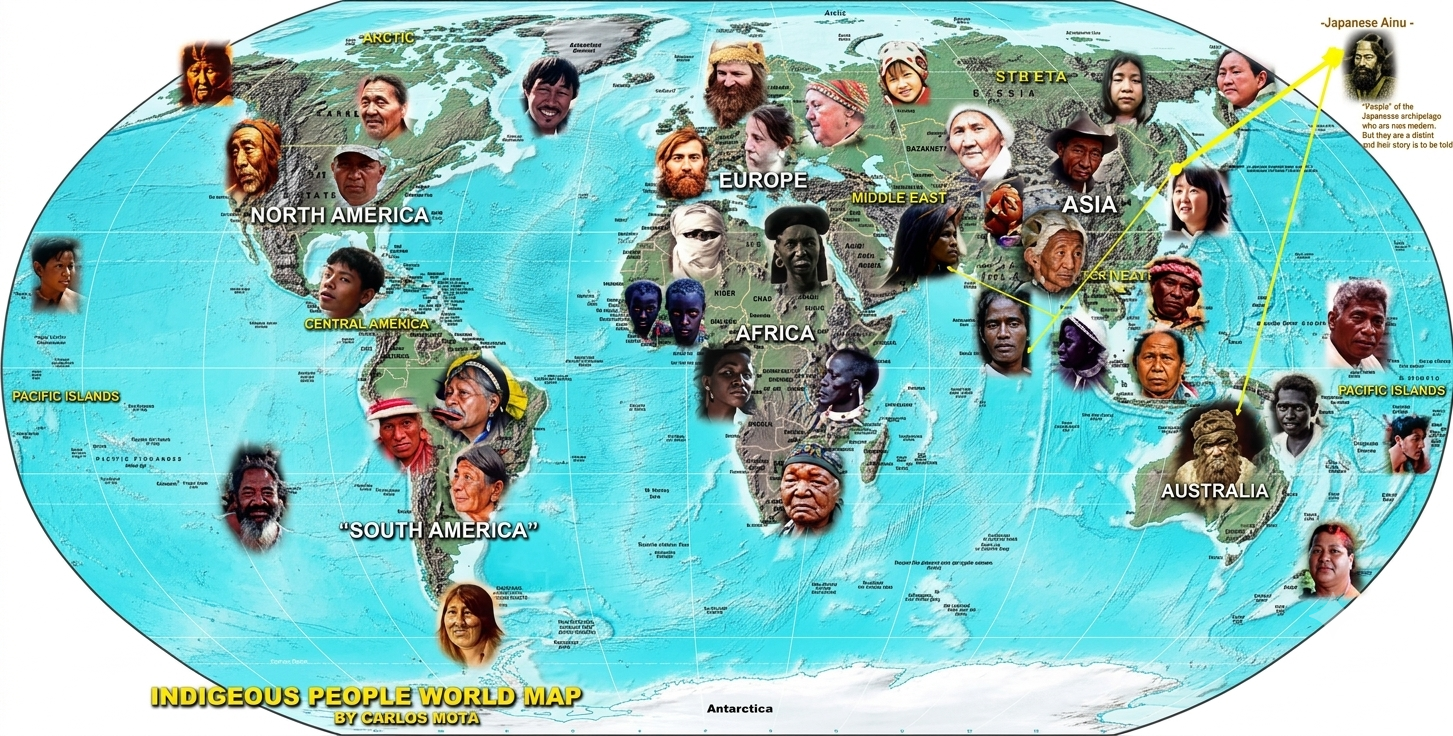
Indigenous Peoples of the World – Protectors of the Environment

Author: Steve Gruber, MBA

There are over 5,000 distinct Indigenous groups worldwide, representing approximately 476 million people. These groups make up roughly 6.2% of the global population and are spread across 90 countries. They are distinctive in their cultural diversity as they represent a vast array of cultures and languages that significantly contribute to the world’s cultural heritage. But perhaps their greatest contribution is that they often live in close relationship with the land and are key guardians of biodiversity, holding significant knowledge about their natural environment. They are global leaders in environmental protection.

Challenges to the Indigenous Peoples of the World
Indigenous groups globally face diverse and interconnected challenges stemming from historical injustices, ongoing discrimination, and the impacts of modernization and development. These challenges include loss of land and resources, cultural and linguistic erosion, limited access to basic services, and vulnerability to environmental degradation and climate change.

  • Loss of Land and Resources
    Indigenous peoples are often dispossessed of their ancestral lands and resources, which are crucial for their livelihoods, cultural practices, and survival. This can be due to large-scale development projects, resource extraction, and land grabbing.
  • Discrimination and Marginalization
    Indigenous peoples frequently experience discrimination and marginalization in various aspects of life, including access to education, healthcare, housing, and political participation.
  • Cultural and Linguistic Erosion
    Indigenous languages, cultures, and traditional knowledge systems are under threat due to assimilation policies, globalization, and the dominance of mainstream cultures.
  • Human Rights Violations
    Indigenous peoples are often subjected to violence, abuse, and other human rights violations, particularly when defending their rights and lands.
  • Environmental Degradation and Climate Change
    Indigenous communities are often disproportionately impacted by environmental degradation and climate change, facing threats to their livelihoods, culture, and survival.
  • Lack of Access to Basic Services
    Indigenous peoples often lack access to adequate education, healthcare, sanitation, and other basic services, leading to lower levels of development and increased vulnerability.
  • Internal Conflicts
    Internal conflicts within indigenous communities can further exacerbate existing challenges, particularly in the context of land disputes, resource management, and political mobilization.
  • Vulnerability to Natural Disasters
    Indigenous communities, often residing in remote and isolated areas, are particularly vulnerable to natural disasters, such as floods, droughts, and earthquakes.
  • Forced Assimilation and Cultural Erasure
    Indigenous peoples have been subjected to forced assimilation policies aimed at erasing their cultures and languages and integrating them into dominant societies.
  • Racism and Bullying
    Racism and bullying against Indigenous communities are deeply rooted in history and continue to impact Indigenous peoples worldwide.

Addressing the Challenges

  • Recognition of Indigenous Rights
    Protecting and promoting the rights of indigenous peoples, including their right to self-determination, land rights, cultural rights, and linguistic rights, is crucial.
  • Support for Indigenous-Led Initiatives
    Empowering indigenous peoples to lead their own development and decision-making processes is essential.
  • Promoting Cultural Preservation and Revitalization
    Supporting efforts to preserve and revitalize indigenous languages, cultures, and traditional knowledge systems is vital.
  • Addressing Environmental Impacts
    Working to mitigate the impacts of environmental degradation and climate change on indigenous communities is crucial.
  • Promoting Reconciliation
    Initiatives aimed at reconciliation between indigenous peoples and dominant societies can help heal historical wounds and foster more equitable relationships.
  • Addressing Systemic Inequalities
    Tackling systemic inequalities in access to education, healthcare, and other services is necessary to ensure equal opportunities for indigenous peoples.

Images of Indigenous Peoples of the World

Illegal Logging in Chile: Structure of the Forestry Sector, Emerging Threats, and Governance Responses

Author(s): Roberto F. Salazar-Córdova and Laurence Hewick
PAX Research Center of the Americas – Policy Research Paper
JEL Classification: Q23 (Forestry), Q56 (Environment and Development), K42 (Illegal Behavior and Enforcement), F18 (Trade and Environment)

Abstract
Chile hosts one of the most productive forestry sectors in the Southern Hemisphere while simultaneously confronting increasing pressure on its native forest ecosystems. Forestry exports reached approximately USD 6.37 billion in 2024, representing roughly 5.5–6 percent of Chile’s exports and about 1.9 percent of national GDP. At the same time, Chile experiences estimated annual forest losses near 80,000 hectares due to fires, land conversion, drought, and illegal logging. This article examines the structure of the Chilean forestry sector, analyzes the territorial intensity of its export model, and discusses illegal logging as one of the most controllable drivers of forest degradation. The paper concludes by proposing governance mechanisms based on cross‑sector institutional coordination and the Hexagonal Dialogue framework.

  1. Structure of the Chilean Forestry Sector
    Chile’s forestry sector is among the most developed in Latin America and plays a significant role in the country’s export economy. According to statistics from the Central Bank of Chile and the Chilean Forestry Institute (INFOR), forestry exports reached approximately USD 6.37 billion in 2024. Chile’s GDP during the same year was approximately USD 330 billion, meaning forestry exports represent roughly 1.9 percent of national GDP and between 5.5 and 6 percent of total exports.

    The sector is largely based on plantation forestry. Chile maintains approximately 3.1 million hectares of plantation forests dominated by Pinus radiata and Eucalyptus globulus (INFOR, 2023). These plantations are concentrated mainly in the regions of Biobío, La Araucanía, Ñuble, and Los Ríos.

    In parallel, Chile still possesses approximately 14.7 million hectares of native forests according to the National Forest Inventory conducted by CONAF. These ecosystems provide biodiversity protection, watershed regulation, and carbon storage.
  2. Territorial Intensity of Forestry Production
    When forestry exports are analyzed relative to territory and population, Chile stands out within the broader Andean economic space. Dividing forestry exports by national territory produces approximately USD 8,420 of forestry export value per square kilometer annually.

    When normalized by population and time, Chile generates approximately USD 35.8 per month per square kilometer per million inhabitants. This measure highlights the unusually high territorial intensity of forestry production.
  3. Drivers of Forest Loss
    Chile experiences estimated forest loss near 80,000 hectares annually according to Global Forest Watch. Several structural drivers contribute to this pattern, including forest fires, plantation expansion, agricultural land conversion, infrastructure growth, and prolonged drought.

    The mega-fires of 2017 burned approximately 570,000 hectares across central and southern Chile (CONAF, 2018). Climate change and the prolonged Chilean megadrought have increased wildfire frequency and severity.
  4. Illegal Logging in Chile
    Illegal logging in Chile is increasingly associated with organized criminal activity. Timber theft operations are concentrated primarily in the regions of La Araucanía and Biobío. Police and judicial estimates suggest that timber theft generates economic losses exceeding USD 100 million annually.
  5. Financial Mechanisms
    Illegal timber markets frequently rely on financial manipulation mechanisms. One common method is trade mis‑invoicing, which involves falsifying price, quantity, origin, or quality in trade documentation in order to integrate illegal timber into legitimate supply chains.
  6. Institutional Response
    Reducing illegal logging requires coordinated action between environmental agencies, law enforcement, customs authorities, financial regulators, and the private forestry sector. Improved timber traceability systems and stronger transport monitoring can significantly reduce the ability of criminal networks to integrate illegal timber into legal markets.
  7. Governance and the Hexagonal Dialogue Framework
    The Hexagonal Dialogue framework integrates six actors simultaneously: public institutions, private enterprises, civil society organizations, academic institutions, media, and local communities. The model emphasizes that territorial development and environmental governance become viable when these actors collectively negotiate investment roadmaps linked to concrete projects.

    This governance approach has been developed in Latin America through cross‑sector initiatives described in ADN+ publications (Salazar‑Córdova, 2021). The framework aims to align environmental monitoring, financial accountability, and community participation.
  8. Conclusion
    Chile’s forestry sector remains one of the most productive export industries in Latin America. However, protecting native forests requires stronger governance mechanisms capable of controlling illegal timber extraction. Because Chile’s forestry sector exhibits unusually high territorial intensity, failures in forest governance generate disproportionately large environmental and economic consequences.

References
Banco Central de Chile. (2024). Estadísticas de comercio exterior de Chile.

CONAF. (2018). Informe de incendios forestales 2017.

CONAF. (2022). Inventario forestal nacional de Chile.

Garreaud, R. et al. (2020). The Central Chile mega-drought. Journal of Climate.

Global Financial Integrity. (2022). Trade mis‑invoicing and illicit financial flows.

Global Forest Watch. (2023). Forest loss data for Chile.

INFOR. (2023). Anuario forestal de Chile.

Salazar‑Córdova, R. F. (2021). Diálogo hexagonal y gobernanza territorial. ADN+.

Trees & Deforestation a Global perspective.

Author: Dr. Laurence Hewick, PhD.

Deforestation refers to the clearing of forests. It has wide-ranging negative effects, including climate change, biodiversity loss, soil erosion, and water cycle disruption, impacting both the environment and human populations. Biggest global cause of biodiversity loss is deforestation. The Earth loses about 38,610 square miles of forest every year. Ninety-six percent of global deforestation occurs in tropical forests. More than half of the planet’s tropical rainforests have been destroyed or degraded. Due to deforestation, as many as 28,000 species are predicted to become extinct by 2050.

Trees significantly benefit the environment by absorbing carbon dioxide, releasing oxygen, filtering air and water, providing habitat for wildlife, and mitigating climate change. Most importantly trees give us oxygen through a process called photosynthesis. Trees absorb carbon dioxide from the air and release oxygen as a result. Trees use energy from the sun to convert water and carbon dioxide from the soil into oxygen. The oxygen is released into the air we human’s breath in and we cannot live without it!

The amount of oxygen a tree produces depends on its age, species, health, and environmental conditions.  Older and more mature trees produce more oxygen. Some tree species, like beech, maple, pine, and spruce, produce more oxygen than others. A large tree can provide enough oxygen for up to four people in a day. They are the world’s best technology for cleaning the air!

Trees help the environment:

Trees absorb carbon dioxide (CO2) from the atmosphere through photosynthesis, storing it in their wood and biomass. This process helps to reduce the concentration of greenhouse gases in the atmosphere, mitigating the effects of climate change. A mature tree can absorb a significant amount of CO2 annually, equivalent to a half a metric ton.

Trees help clean the air by absorbing pollutants like nitrogen oxides, ozone, and carbon monoxide, and by filtering dust and smoke. They also filter water by absorbing pollutants and preventing runoff, which can lead to water pollution and flooding.

Trees provide essential habitats for a wide variety of plants and animals, supporting biodiversity and ecosystem health. They also help prevent soil erosion and landslides, which can damage habitats and ecosystems.

Trees help regulate the water cycle by absorbing rainfall and releasing water vapor into the atmosphere. They also provide shade and help cool urban areas, reducing the urban heat island effect. Trees can also help prevent flooding by absorbing excess water and slowing down runoff.

Global Geography of Trees:

The countries with the most trees, and therefore the largest forested areas, are:

  • Russia: Holds the largest area of forest, with an estimated 642 billion trees and covers almost about 50% of their country.
  • Canada: Has the second-largest tree population, with roughly 318 billion trees, and its forests cover almost 40% of the country.
  • Brazil: Home to much of the Amazon rainforest, Brazil has a large rain forest coverage with 302 billion trees.
  • United States: The US has 228 billion trees, with roughly 30% of the country covered in forests.
  • China: Has 140 billion trees, which covers approximately 23% of its territory.

Impacts of Deforestation.

  • Climate Change: Deforestation contributes to climate change by releasing stored carbon into the atmosphere and reducing the planet’s capacity to absorb carbon dioxide, a major greenhouse gas.
  • Biodiversity Loss: Forests are homes to a vast array of species, and deforestation leads to habitat loss and fragmentation, driving many species towards extinction.
  • Soil Erosion: Trees and plants anchor the soil, and their removal leaves it vulnerable to erosion by wind and rain, leading to landslides and reduced soil fertility.
  • Water Cycle Disruption: Forests play a crucial role in regulating the water cycle, and deforestation can disrupt rainfall patterns, reduce groundwater recharge, and increase the risk of floods.
  • Desertification: Deforestation can lead to desertification, where fertile land turns into desert-like areas.
  • Reduced Oxygen Production: Trees produce oxygen, and deforestation reduces the amount of oxygen available in the atmosphere.
  • Increased Greenhouse Gases: Deforestation releases carbon dioxide, a greenhouse gas, into the atmosphere, contributing to global warming.

Impacts on Human Populations:

  • Food Security: Deforestation can lead to reduced agricultural productivity and food shortages, particularly in regions heavily reliant on forest resources.
  • Economic Impacts: Deforestation can negatively impact local economies that depend on forest products, such as timber and tourism.
  • Health Impacts: Deforestation can lead to increased exposure to pollutants and infectious diseases, as well as reduced access to clean water and sanitation.
  • Displacement of Indigenous People: Deforestation can displace indigenous communities who depend on forests for their livelihoods and cultural practices.
  • Increased Flooding: Deforestation can increase the risk of flooding by reducing the soil’s ability to absorb water.

The major causes of deforestation are population demand for lumber as a construction material. Forest fires, mostly caused by climate change. Conversion of the land to cattle ranching and lastly mining.

What are the Worst countries in world for deforestation?

Based on recent data (2015–2024), the top five countries with the highest rates of deforestation, driven by agricultural expansion, logging, and infrastructure development, are generally considered to be:

  1. Brazil: Consistently ranks as the highest in the world, with massive losses in the Amazon due to cattle ranching and soy production.
  2. Indonesia: Experienced significant forest loss for palm oil plantations and logging, although rates have fluctuated.
  3. Democratic Republic of the Congo (DRC): Faces high deforestation due to small-scale agriculture, charcoal production, and logging.
  4. Bolivia: Recently saw record-high deforestation, largely driven by large-scale agricultural expansion and forest fires.
  5. Angola/Tanzania: Frequently listed due to rapid forest loss from land clearing for agriculture and housing.

NOTE: Shortly after taking office in 2025, Donald Trump promised to rapidly expand the US timber industry, pledging to increase logging on federal lands by 25%. He aimed to fulfill this promise through a series of executive actions aimed at removing regulatory barriers and increasing domestic production to reduce reliance on imported wood products.

Who are the top 5 countries in the world for forestry management?

Based on sustainable practices, innovation, and industry management, the top countries for forestry management are generally recognized as Finland, Sweden, Canada, Germany, Rwanda and Costa Rica. These nations excel through a combination of mandatory reforestation laws, high-tech sustainable harvesting, and advanced conservation efforts.

  • Finland & Sweden: Renowned for long-term sustainable forestry, where laws often require planting more trees than are harvested, sustaining high-value pulp and paper industries.
  • Canada: Possesses extensive, stringently managed forests with a focus on sustainable development and vast certification programs.
  • Germany: Known for a historical commitment to sustainable forestry and high- value, efficient, and structured timber production.
  • Rwanda: for reforestation and conservation efforts.
  • Costa Rica: for preserving the rain forests as a source of tourism.

In conclusion trees are not just aesthetic additions; they are active, indispensable components of Earth’s ecosystem, functioning as the planet’s “lungs” by absorbing CO2, releasing oxygen, and acting as natural, energy-efficient air conditioners. So go ahead and “hug a tree” and feel good about it.

Bolivia and It’s Environmental Risks. (an overview)

Author: Dr. Laurence Hewick, PhD.
Date:
01/26

Bolivia is a land locked country in central South America with a population about 12.4 million people. It’s people, are mostly Mestizos (68% mix of Indigenous and European). About 20% are Indigenous of Inca decent and the balance mostly white Europeans.

Bolivia’s geography is incredibly diverse defined by the Andes Mountains in the west reaching over 6,500 meters (21,300 feet) to the high-altitude Altiplano plateau in the center, and vast tropical lowlands to the east and north that includes about 9% of the Amazon Basin. This varied terrain creates multiple climates, from snowy Andean peaks to humid rainforests of the Amazon basin. It also hosts unique features like Lake Titicaca (world’s highest navigable lake) and the Salar de Uyuni salt flat (world’s largest salt flat of about 10,000 sq. km). Bolivia has significant mineral resources like natural gas, tin, lithium, gold and silver.

Bolivia’s Santa Cruz region, centered around Santa Cruz de la Sierra, is Bolivia’s dynamic economic powerhouse in the tropical eastern lowlands, known for its booming agroindustry. But despite being Bolivia’s largest city and economic engine it is also the home of its biggest environmental crises. The southeastern district of Santa Cruz in Bolivia experiences the greatest deforestation within the country. Bolivia consistently has one of the highest rates of primary forest loss in the world driven primarily by the expansion of field crops such as soy as a livestock feed and cattle ranching.

Mass deforestation in the Amazon area of Bolivia causes massive biodiversity loss, disrupts global climate by releasing CO2 and altering rainfall, exacerbates soil erosion and desertification. Further, it threatens indigenous communities, and increases the risk of zoonotic diseases, creating drier conditions that can lead to more fires and potentially turn parts of the rainforest into savanna. The biodiversity loss in Bolivia is seen in the loss of primates like spider monkeys, apex predators like jaguars and specialized birds like toucans. These are hardest hit due to habitat loss and limiting movement for tree- dependent species that use trees for food, protection and transportation.

Adding further to the environmental risks in Bolivia are mining contaminations because of unregulated mining (especially gold) where contaminates flow into rivers, carrying mercury that harms local ecosystems, wildlife and humans. Many of the illegal mining operations are permitted to go unnoticed by local and regional governments who place resource extraction as a form of economic development over environmental protection.

Climate change has also impacted Bolivia with severe droughts, floods and increases in temperatures. The increase in temperature causes much glacial melt in the Andes Mountains that are some of the steepest in the world. The valley’s below, where many Indigenous people live and carry on subsistence farming are becoming increasingly dangerous due to landslides, flooding and loss of topsoil. Key related issues involve struggles over land rights against extractions (mining, oil, gas, hydroelectric projects) that threaten territories, leading to displacement, cultural erosion, and violence against activists, despite constitutional commitments to Indigenous rights. Political subjugation, fragmented trust, and the government’s concern for revenue over resources further complicate efforts to protect Bolivia’s natural environment.

End of Year Review. Part 2 (Canadian Economy, 2026).

Author: Dr. Laurence Hewick, PhD.
Date: 12/25

The new year is shaping up to be another turbulent one, as the renegotiation of the United States–Mexico–Canada Agreement (USMCA) will once again create a climate of uncertainty that will hamper the country’s economic activity. Canada’s GDP is expected to grow by a modest 1% to 1.3% in 2026, down slightly from 2025, which is expected to close with 1.2% to 1.4% growth. Inflation should remain around 2% while we see average wages increases of about 3% to 3.5% and unemployment between 6.5 to 6.8%. Unemployment will depend on our ability to attract, retrain and transform workers to meet new changes in technology.

The Canadian economy will continue to evolve in a highly uncertain context, once again dominated by tariffs and the USMCA’s renegotiation—scheduled for July—which will continue to impact our exports negatively. These trade tensions are also likely to dampen businesses’ enthusiasm for investment. Thus, consumer spending will once again be the primary driver of economic growth in Canada in 2026. Year after year, household consumption accounts for about 60% of GDP. The demand for goods and services plays a more crucial role in the current context, serving as a stabilizing factor for the Canadian economy. Buy Canadian!

Governments will likewise do their part, as expansionary budgets will also contribute to economic growth. Government and consumer spending will therefore fuel Canadian economic growth in 2026, albeit at a slower pace due to the impact of tariffs and trade tensions. Canada will be an economy in transition as we are weaned away from relying on the USA.

There are numerous opportunities for businesses to capitalize on as 2026 marks the start of a significant shift in the Canadian economy. We are in the middle of a technological revolution. Companies that embrace this shift, particularly by adopting and integrating artificial intelligence, will be able to improve their operational efficiency – providing we are not in an AI bubble, can monetise the technology, overcome governance hurdles, implementation challenges and can overcome increasing sophistication of cyber threats that are targeted at our infrastructure and supply chains.

In addition, the Canadian government has recently announced a series of significant projects that will not only impact the country’s economy but also represent new opportunities for local businesses. The expansion of the Port of Montreal, the implementation of mini nuclear reactors, expanding roads to the ‘ring of fire’ in Ontario, and a liquefied natural gas terminal in British Columbia are all examples of projects that will benefit Canadian businesses. Further, increased demand for electricity, notably to support transportation electrification projects, power data centers, and artificial intelligence, will lead utility companies to increase their generation capacity. These increases will create opportunities for new well-positioned firms to become part of the utility companies supply chains and foster long term additional growth.

Finally, the defence sector is also expected to expand in 2026 and in the years to come, as the Canadian government has committed to significantly increasing its spending to strengthen Canada’s sovereignty. It also aims to establish a national supply chain for the defence sector, presenting an opportunity for companies to capitalize on the billions of dollars that will be invested in the sector’s development.

Canadians are fortunate to have a well-educated and respected Prime Minister with world experience to lead us these in these turbulent times.

The Roboré Geopark of Bolivia

Bolivia’s hidden gem is a geopark in Roboré that could unlock sustainable development, protect biodiversity, and inspire scientific discovery through its unique geological wonders.

The problem of youth entrepreneurship in Latin America

Youth entrepreneurship is a vehicle for enhancing the employability and social mobility of young people, allowing also for social transformation. Latin America youth encounter many challenges that hinder their development and access to grow start-ups to mature firms.

Thriving in a deeply unequal global landscape

Youth entrepreneurship is a vehicle for enhancing the employability and social mobility of young people, allowing also for social transformation. Latin America youth encounter many challenges that hinder their development and access to grow start-ups to mature firms.